Showing posts with label G321 Thriller planning. Show all posts

Friday, 23 April 2010

Revised location shots.


As we decided to change the location from Prince of wales street to underneath the bridge on prince of wales street near the river, we have taken new location shots to comply with our location in our film.


This is behind the steps where the boy hides, whilst the girl is walking down the steps in the first shot.


These are the steps that the girl walks down in the first shot and feature in the background of some of the following shots.


This is the overall location the line of lamposts along the path provide us with the lighting that we needed and also helped us to have a limited and pastel colour palette within the film.


This is the bridge that the boy and girl walk over just before the boy tried to attack the girl, the bridge reinforces the sense of insecurity on the girls behalf.


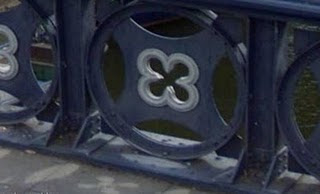
The gate that features in a shot in the film, this shows an escape for the girl.


Images by; Lexie Ferguson


Wednesday, 31 March 2010

Location shots.


These are the location shots from our original storyboard.


This is a shot of the corner of prince of wales road where our thriller is set, the pub in the shot is at the top of the steps that the girl stumbles down in our thriller.


This is a shot of the bridge, overlooking the river and pathway were our thriller is film.


This is another shot of prince of wales road.


This is a shot of the nightclub that the girl has been in, in the original plans we were going to show the scenes in the nightclub.


Location shots by; Lexie Ferguson
Commentary by; Louise McGee


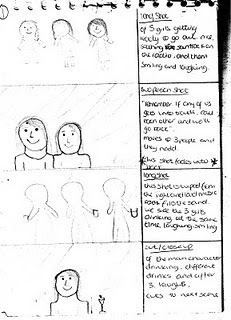
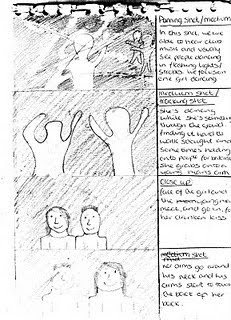
Storyboard.


This is the original storyboard that we created during the planning of our thriller, however in the final product of our thriller, we have changed the shots that we have used, because of the timing of our thriller and the fact that we were only allowed the to have a total time of two minutes of footage, in our final product we cut out the scenes of the girl and her friends, because we did not think these were very important in creating suspense and ambiguity. We also cut the club scene and the kidnapping scene involving the van, because using these we would not be able to adhere to the time limit. So we decided to just use the scenes when the girl is walking home by the river and the boy and girl meet.


Tuesday, 30 March 2010

Music for our thriller film.

The soundtrack to our thriller will be eerie and futuristic, as music to many thrillers, especially film noir thrillers is new and different (insomnia and third man soundtracks are both good examples of this). It should also be drone like, with slow changes, with strange out of world effects, reflecting the dreamlike, drunk effect created within the thriller. I also want a second piece of music to be used in the climax of the opening, when the girl is attacked by the girl. It should be sharp quite scary music, like the famous music in the shower scene in psycho. This music should contrast heavily to thesoundtrack for the rest of the piece, taking the audience by surprise, and throwing them off balance.

By Sam Hudson.

Friday, 26 March 2010

Casting - character sketches.

The girl; A seventeen year old girl, brown hair, sixth form student, enjoys going out; the story shows the girl after a night out on prince of wales street in norwich after she is very drunk and is being followed by a man, whilst she is walking home by the river in riverside, norwich. Firstly, we believe that the man, is acting as her protector; offering to walk her home and giving her hand when she falls over by the river, however we see how he turns and becomes the villain not the protector. This portrays the girl as being; vulnerable and perhaps adhering to the stereotypes of an eighteen year old girl. We have portrayed the boy as being the protector to start with in our film; by portraying him as kind and caring towards the girl, we acheived this by; the close up shots of both their hands coming together, where the boy helps the girl up, after she falls over by the river, however when the audience realise that the boy is the actually the villian and the girl is the victim; we show this to the audience by showing shots of the boy at the start of our film, standing behind the girl, looking very suspect, which creates ambiguity, however when the boy and girl meet the audience is led to believe that the boy is the protector, because of the dialouge and close up camera shots, which help the audience to feel more envolved in the story.

The boy; A 20 year old boy, therefore is slightly older than the girl, which in theory makes him more mature, he is also a student at university, which although the audience do not know this, if they did it would create connotations that he should be responsible, as an intelligent university student. He is walking by the river, when the girl is walking down the steps to go home and we see him lurking behind the steps looking at the girl, when she falls over, he then takes on the role as the `protector`, however slightly later in the film, we see him being aggressive and violent towards the girl, this is where the audiences view of him change, because of his actions. We have portrayed the boy as the villian and as being of a violent nature, by showing the chnage in his personality, which is very like that of `jeckyll and hyde`. His personality change is portrayed to the audience through; the use of close up camera shots that are used when the boy is being violent towards the girl and pushing her against the lampost, which creates connotations of violent and threatning behaviour that the boy is using towards the girl.
Overall, we have acheived the ambiguity that we wanted to acheive within our film, by using close up shots of the characters and their actions to create suspense and a sense of what will happen next.

By Louise McGee


Friday, 19 March 2010

Costumes

Within the planning of our thriller, we needed to consider the clothing carefully of what our characters would wear, as the costumes create different ways in which the character is perceived.

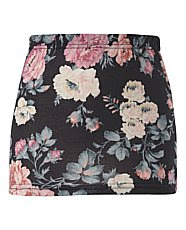
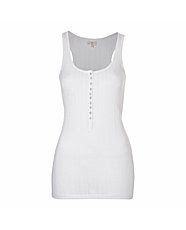
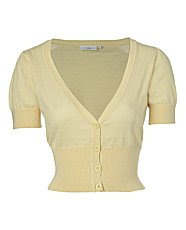
We chose for the girl to wear; a short flowery skirt, a beige/white vest top, a beige cropped cardigan and white canvas shoes. We gave the girl the costume of a short flowery skirt, because the flowery pattern shows the girl is feminine and innocent, however by the skirt being short this shows a different side to her, the whole colour palette of her costume consists of pastel colours, this shows that she is girly and it does not represent a dark or bad side to the girl, therefore reinterpreting the fact that the girl is incredibly vulnerable within the story. The costume, also represents the girl a fashion concious and shows her youth, which re-enforces her occupation as a second year sixth form student.

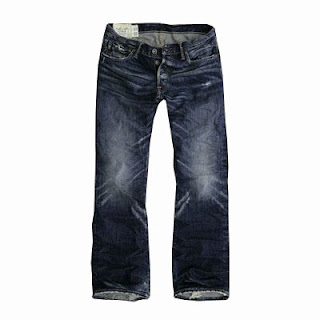
We chose for the boy to wear; a black jacket, dark jeans and white trainers. We gave the boy the costume of a black jacket, because this represents the boy as being a dark and evil character to the audience. The dark jeans reinforces the boys characteristics of being dark and evil that are protrayed within the film, however the use of the light coloured trainers challenges these characteristics, as white is usually a colour that represents innocence, however in this case it does ont, they create mystery because they are of a different colour palette to the rest of his costume. Although the trainers are white and in this case do not represent innocence, they are showing the audience that there is perhaps a nice side to the boy, that we as an audience do not see. The costume, is also very casual and a very ordinary outfit, which will make the audience believe that he is just an ordinary boy, when he first appears within the mise-en-scene. The boys costume, also re-enforces the fact that he is a university student, because of his smart, but casual dress code and the fact that his costume consisits of mainly all black clothing, creates mystery and ambiguity, therefore leaving the audience to decide the personality of the boy.


This is the girls costume;


This is the boys costume;


By Louise McGee

Thursday, 11 February 2010

How do `The third man`, director Carol Reed and `Insomnia`, director Erik Skjoldbjaerg use the conventions of a thriller.


Stills from the third man.


This is an image of anna on stage, anna is the femme fatile in the third man.
This image is from the chase in the sewers, it show the stylized mise-en-scene, that the third man has, because of film noir and the shadows and the vanishing point that appear in the image.
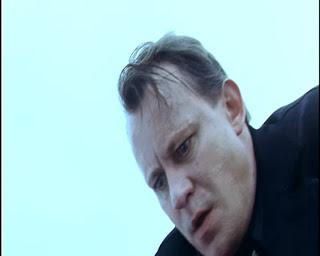
This is Holly martins, in the sewer chase scene, when he escapes onto the street from the sewer, this is an extreme close up of his face, the black background makes his face more dominant of the mise-en-scene.
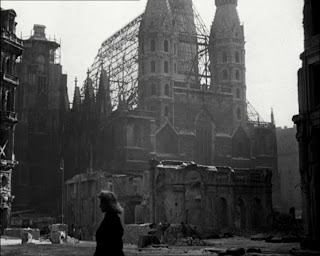
This shot is featured within the opening of the third man and shows the ruins, which have been created by the war in vienna.
This is a shot of the graveyard, which has connotations of death and danger, it also creates an eerie feeling to the audience. This also represents the theme of death.
This is a shot of the holly martins walking down the street, this shot is very well composed because of the lighting, the shadows, tilt shot and the reflections off the road.


This is a close up shot of holly martins, the black back ground makes his face more prominent within the mise-en-scene.
Extreme long shot.


Big wheel ride. ^Harry lime and anna, after her show.


Stills from Insomnia.


The theme of death; use of an investigation room, investigating the murder of Tanya, bleak, limited colour palette.
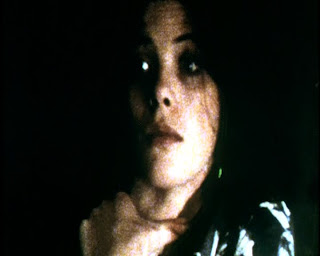
Tanya being strangles leading to her death, the black background connotes evil, the image of her face is very grainy, suggesting insomnia is an independent film because of the colour palette, not being a stylized as the third man.
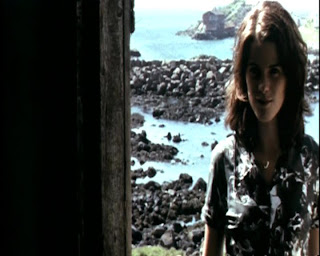
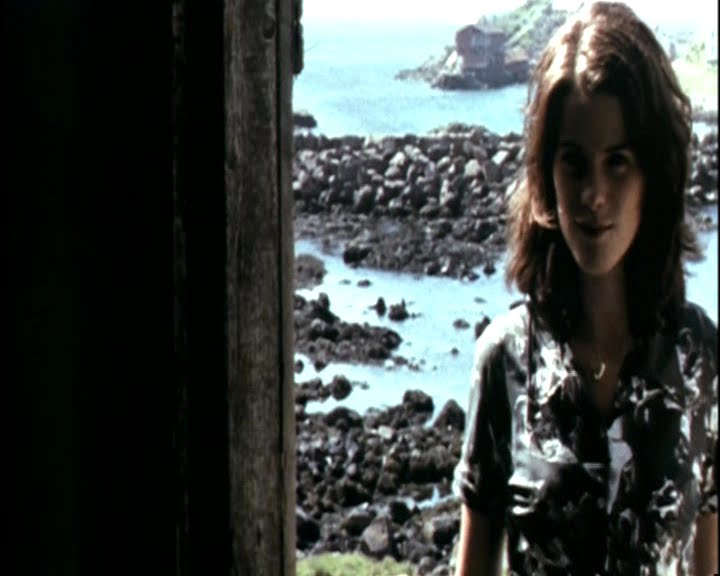
Tanya, being filmed by her lover before her death, this is shown within the opening sequence, dominates two thirds of the mise-en-scene, she is smiling and looks happy and content.
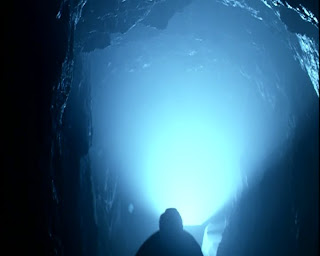
Chase scene, underground, silhouette of jonas.
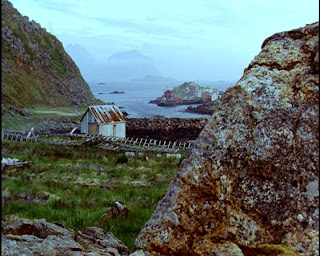
Where jonas shoots his colleague by accident, set in norway, overlooking the lake.
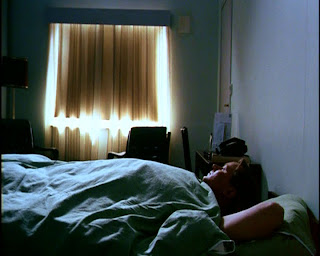
Jonas attempts to keep out the light by putting cardboard at his window, this represents that he is trying to keep people out and stop them from knowing the truth, it represents that he is hiding his true identity from people.
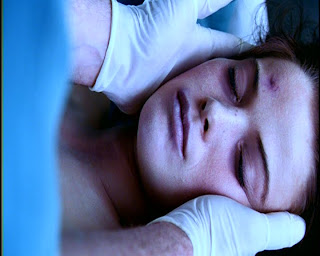
Murder investigation being carried out on Tanya, very bleak, limited colour palette, representing the effect death can have on people feeling cold and upset, which the blue represents.
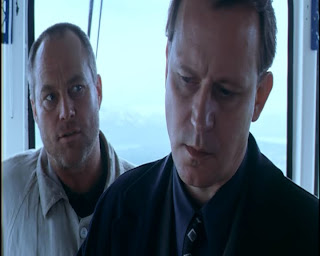
Cable car scene.
Investigation map
Close up of jonas, dominating the mise-en-scene, shot at an angle.
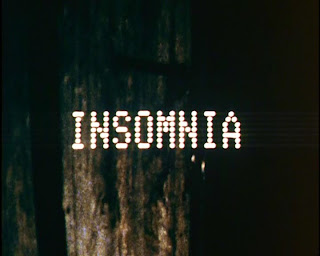
Insomnia title, dark background fades into Tanyas death.

The third man, directed by Carol Reed in 1949 is set in Vienna. It involves a man called Holly Martin, who plan to meet his old school friend, Harry Lime in post-war Vienna, because he has offered him a job, however when he gets there he finds out Harry has died. It also tells the story of how Harry lime, forged Anna Schmidt’s passport, because she is Czechoslovakian and if the Russians found out they would throw her out of this part of Vienna because she is not Austrian.

Insomnia, directed by Erik Skjoldbjaerg in 1997 is set in Norway and is a Norwegian film, with English subtitles. Jonas Engstorm and his police colleague, help another police squad, to investigate the murder of a young girl named Tanya Lorentzen, however whilst they are both out at the crime scene, Jonas engstrom shoots his gun and it accidently is fired at his police colleague, because of the misty setting which makes it hard to see in the distance therefore resulting in his colleagues death at the scene, this creates a second murder to be investigated, Engstrom does not own up to the crime he has committed.

Both, in the third man and insomnia, the main characters are faced with a moral dilemma, in the third man, Holly is faced with a dilemma involving Anna and her passport that his school friend harry lime had previously forged for his lover, Anna Schmidt. In Insomnia, Jonas is faced with the dilemma, of owning up to the crime he has committed even though it was by accident. This represents the vast change in their characters during the film as they change from having connotations of being good, innocent and justice to being bad, guilty and injustice.

In both films, a femme fatile is used, in the Third man, Anna is the femme fatile; she is portrayed as being vulnerable and as having a lost identity, because Harry lime has forged her passport so she can stay in Vienna, because she is Czechoslovakian and otherwise she would be deported out of the country by the Russians. She is deemed on as a femme fatile because of her presence in the film and her attitudes towards Harry lime and Holly martins. In Insomnia, the femme fatile is less obvious as it could be Tanya, the young girl who was murdered, however it could be the young girls friend, Froya selmar who Jonas seduces in the car, whilst driving to the scene where her friend was murdered. Jonas uses Froya, as a way into the investigation of Tanyas death. The femme fatile is very often used in thriller films, in order to portray the victim and portraying connotations of vulnerability and romance.

The use of lighting is a key element in a thriller film, as it creates different moods in order to help produce various atmospheres within the film. Lighting is also used to create a strong key light; showing a light and dark contrast on a scene or on a particular characters face, this creates connotations of good and evil. In the third man, carol reed used lighting to create a strong key light and shadows, which have connotations of stalking. Carol reed also uses back lighting to create silhouettes. Reed particularly uses the lighting effects in the scene, in the underground sewer, because of the back lighting this created silhouettes and shadows, which connoted that the character is being stalked. The use of the strong key light which is used in close up shots of the characters shows dark and light shadows on the characters face; these shots that have been used by Reed in the third man and have connotations of good and evil and represents that there are good and evil sides to everyone, however it also shows a side to the characters that the audience do not necessarily see, because of it only being subtly represented by the director. In Insomnia, the lighting is more subtle because it is in colour, rather than black and white like the third man, however Erik Skjoldbjaerg uses a strong key light, like Reed does in the third man, which shows the two sides to each character; good and evil, which represents the film well, especially Jonas, because of the two very different sides of him that we see.

In both films, a mortuary is used, in the third man we see it in the form of a graveyard and in Insomnia we see the mortuary in the form of the investigation room, where Tanya lays and is being investigated on, to find the person who killed her. The mortuary is used in a thriller film, because of the theme of death that is largely present within all thriller films, although the two types of portray are different, they both represent death, they also represent crime.

Another convention typically used in thriller films is the uses of extreme close ups, extreme long shots, tilt and pan shots. These shots are typically used within the mise-en-scene of thriller films because they represent the characters from different viewpoints and angles. The use of extreme close ups, enables the audience to engage with the character and see exactly who they are, extreme long shots, also enable this aspect of being able to see exactly who the person is, but from a distance, the use of a long shot also creates a mystery of who it is, it also helps to create suspense, because we are wondering who the character is and what they will do within the film. Tilt shots, create different angles as to how we look at the characters, however this has tow meaning as it create a different angles in the way of how we visually look at the person and another angle of how look at someone, is that of how we view them in a sense of their characteristics and what role we think they are going to play in the film. Pan shots are used in order for the audience to establish what is around them; the location, characters, props, it also creates a sense of mystery and suspense. In the third man, Carol Reed uses a variety of all these shots; she uses extreme close ups to show the characters faces, this technique helps the audience to connect with the characters and to understand what is going on in the mind of the character. Reed also uses extreme long shots, she uses these shots, in the underground sewer scene, along with the strong key light this creates mystery and shows the good and evil sides of a character, she also uses tilt shots within this scene, the use of these shot types creates a feeling a being disorientated. Carol Reed uses the pan shots to enable us to view the mise-en-scene. In Insomnia, Erik Skjoldbjaerg also uses a mixture of all these shots types, Skjoldbjaerg uses extreme close ups when Tanya is being killed, this effect makes the audience feel as if they are present at the murder of Tanya, this makes the audience feel more involved with the film. Extreme long shots are used when Jonas accidently shoots his fellow colleague, because of the mist in the field and Jonas mistakes him for someone else. The use of these long shots makes the audience feel as if they are not so involved with the scene; it also creates a mystery for the audience and adds suspense because we are unsure of what exactly has happened in the first instance. The use of long shots, in the scene where Jonas takes Froya, to the scene of Tanyas murder, to try and attempt to find out what happened, for the majority of this scene, long shots are used, which is enabling the audience to see the characters and the scenery, it also differentiates from the previous scene in the car, where extreme close ups are used, which is very suitable for the scene because of the suspense it adds, because we are unsure as to what is going to happen. Skjoldbjaerg, also uses shot reverse shot in the car scene, which also helps to add suspense, because of the constant reversing of characters and their changing expressions, which helps us to understand what is going on within the mise-en-scene.

A theme that is present within both films is isolation and the characters feeling isolated. In the third man, isolation is represented in the way of the big wheel in the fun fair; this represents isolation because you are trapped in a cart, high in the air. In the third man, Holly martins, could be said as being represented as an isolated character, because he is looked at as a being foreign when he goes to Vienna to meet Harry Lime. In Insomnia, Skjoldbjaerg shows isolation in the form of the cabin in the mountains.

Although both films are thrillers, they have a different colour palette. The third man, being a black and white film has a very minimal colour palette, with a stylised environment, on the other hand Insomnia, is a colour film although it is a colour film; Erik Skjoldbjaerg has made the colour palette very dull and bleak. The third man, because of it being a black and white film, it relies heavily on the lighting, to give different moods to the scenes. Insomnia, being a colour film can change its colour palette to fit with the mood and theme of the film, as Erik Skjoldbjaerg has done with Insomnia. He has made the colour palette, to be very dull and bleak; this is fitting to the theme of the film, because of its theme of murder. Although the colour palette is fairly limited in Insomnia, grain and light has been added using editing techniques to show the contrast.

In both films a repetitive soundtrack has been used, both of which are entirely instrumental. Both of which add to the suspense, because of their repetitive nature.

Insomnia and the third man were set and filmed in different periods of time, this is made very evident, by the colour palette and also the technologies that are present within the film. In insomnia, we see forensics being used, to indentify who the young girl’s killer is, we see the killer washing Tanyas hair whilst wearing rubber gloves, so there will be no traces of evidence or her murderer, this is showing new technologies, that are not evident in the third man. The use of new technologies, also shows the progression of technology from the 1940s when the third man was made, to the 1990s when Insomnia was made. The use of the props in Insomnia in particular the locket, has a deep meaning of love, however most importantly it holds forensics that tell us who the murderer is.

In conclusion to the question, how do the directors of The third man and Insomnia, use the codes and conventions of a thriller film, I have discovered that the directors use the conventions of a thriller film, in order to create an interesting storyline, by using various shot types, lighting, locations and themes of isolation.

Friday, 22 January 2010

Shooting schedule

1st February:
5pm/7pm, at Riverside in Norwich (we’ll meet at the bridge)/ to film all the opening shots of the opening, from the girl going down the stairs, up till her walking away with the male. All cast and crew will be needed (Megan Purdy, William Durham, Sam Hudson, Lexie Ferguson and Louise McGee). The equipment need will be a tripod, digital camera and tape. The costumes we will need are a black hoodie, jeans, and trainers for the male; and a skirt, t-shirt, cardigan and plain shoes for the female.

15th February:
5pm/7pm, at Riverside in Norwich (we’ll meet at the bridge). To film the second half of the opening, from the girl and male walking along, up till the male grasping the girl by the throat. All cast and crew will be needed (Megan Purdy, William Durham, Sam Hudson, Lexie Ferguson and Louise McGee). The equipment need will be a tripod, digital camera and tape. The costumes we will need are a black hoodie, jeans, and trainers for the male; and a skirt, t-shirt, cardigan and plain shoes for the female.

2nd March:
5pm/7pm, at Riverside in Norwich (we’ll meet at the bridge). To refilm the shots which were to dark, because you couldn’t make out facial expressions, and also film establishing shots at the start and end of the opening. All cast and crew will be needed (Megan Purdy, William Durham, Sam Hudson, Lexie Ferguson and Louise McGee). The equipment need will be a tripod, digital camera and tape. The costumes we will need are a black hoodie, jeans, and trainers for the male; and a skirt, t-shirt, cardigan and plain shoes for the female
.

Sunday, 17 January 2010

Costumes, characters, music and location for our thriller film.

The Characters:

The Girl;
The girl should be not too tall, so she should in a way quite weak and powerless compared to the man. She should be good at being drunk, and also have good facial expressions. She should be wearing lots of make up, and a lot of lipstick.

The Man;
The man should be quite tall, taller than the girl and also quite kind and warmly looking. But he most also be able to look extremely intimidating and mad.


The Locations:

We are going to film our first film at one of our groups houses, as it is an in club scene. WE will use darkness with in stage lighting, and about 5 supporting actors, to make it seem like there are a lot more people.
In the second scene we are going to shoot at riverside, because it is quite a lonely place at night, and the river is also a great place to film in terms of a thriller film, it is a place where things could be hidden, which send a message to the audience.


The Music:

We are going to incorporate music into our thriller. For the first scene within the club we our going to use loud dance music. We are going to find music by an unsigned band that people could dance to. Then in the second scene we aren’t going to use any music to begin with, the silence of the characters walking and just Diegetic sound will make a great contrast with the loud music, and will therefore make the second location fell a lot more lonely and in a way intimidating.


Costume:

The man in the thriller should be wearing plain trousers, a shirt and good shoes. This will make him seem like a ‘safe’ character, he doesn’t look like the stereotypical stalker murderer character of thrillers, and so when he flips on the girl it will take the audience by surprise and throw them off balance, which is what we want to achieve in our opening.

The girl in our thriller film will be wearing a costume that would be expected on a night out. So she will be wearing a dress, it should be quite short. It will be red, this will be a signifier that she is the main character, and it is also a colour that is often seen as going well with thriller films.
As the scene progresses and she becomes more drunk, her costume will become more ‘messed up’ showing she is drunk, their could even be small tears, and creases, showing her vulnerability.

By Sam Hudson

Tuesday, 15 December 2009

References to our thriller film.


In the planning stage of our thriller film, we needed to find films that had a reference to our own, when thinking about this we needed to consider; setting, lighting, shot types, storyline, sound, costume, age/gender of characters, social class/background of characters in order to find a film that we had seen or heard of that held a reference in any of these ways to our own thriller film.


We made two references they are; `psycho` and ` the third man`. Psycho, by Hitchcock, has a reference to our own because of the use of long shots to show the criminal and the way in which Norman Bates is portrayed as being a caring and kind man towards Marion and then towards the end of the film he becomes the criminal when he kills her, this has a reference to our thriller film, because the man who is portrayed to look like a caring young man towards the girl making sure she got home okay, however towards the end of the film just like in psycho he becomes he criminal when he begins by stalking her out of the club and attempts to kidnap her.


the famous shower scene;when norman bates becomes the criminal


The other reference we made was to `The third man`, by Carol reed, has a reference to our thriller film because of the stalking scene, which is the main issue in the storyline in our film. Another reference that we made was the lighting that is used in the third man, that is very dominant in the mise-en-scene, because it has been filmed at night on a wet cobbled street and the only light is a street lamp which creates a very a typically thriller lighting, we are also filming in the evening and the only light will be the light from the surrounding streetlamps and clubs, we are going to try to schedule to film on a evening when it has been raining during the day, so the light will reflect off the pavements like in the third man.


this image from the third man shows the different lights and the reflection from the light on the wet pavements.


This image is from the third man, and shows the dark and light well and the light from the streetlamps and the way that the man looks like a silhouette in the distance.


By Louise McGee